- Inside Health's Newsletter
- Posts
- Inside Health Weekly: Anxiety Edition
Inside Health Weekly: Anxiety Edition
Why Is Your Brain Hitting the Panic Button?

Inside Health
June 18, 2025
Inside Health Weekly
Good Morning!! 😃😃😃
We are officially live, coming to your inbox every week with health breakdowns, science backed tips, and tools to help you understand how your body functions.
Enjoy!
This Week’s Focus: ANXIETY
You’ve done the TikTok dance to Doechii’s Anxiety… now let’s talk about managing the real thing.
This week, we’re diving deep into what anxiety really is, the science behind why you start spiraling, and what you can do to feel in control.
From recommendations to resources, let’s talk panic, pressure, and how to stay grounded when your brain’s going loco.
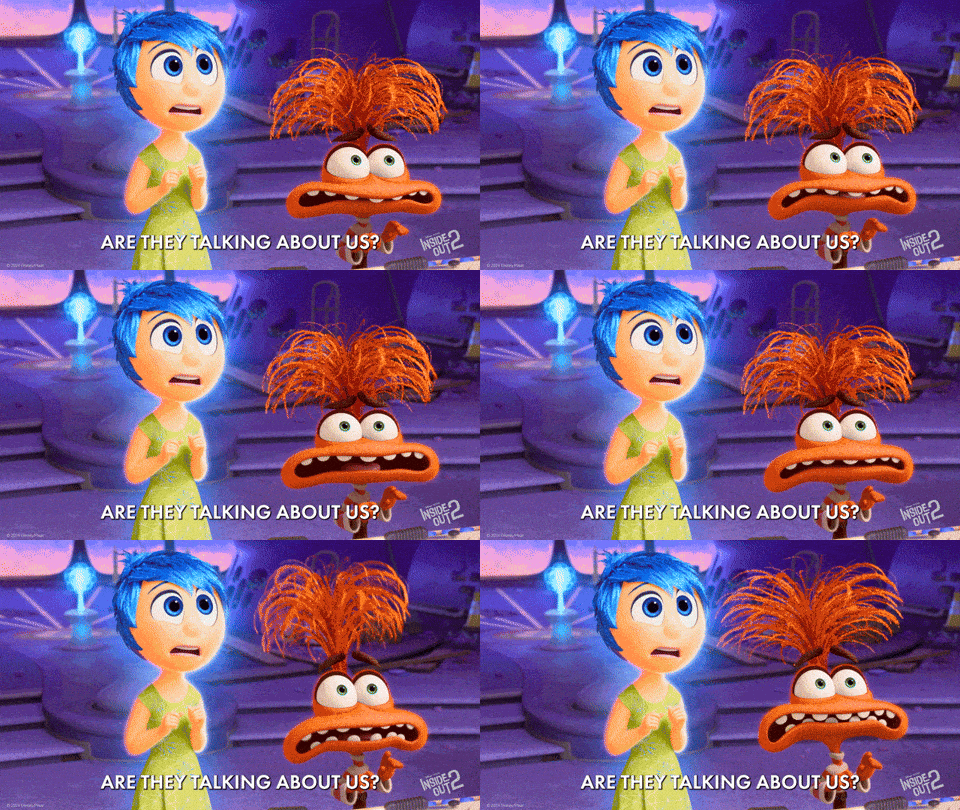
1. 🎧LISTEN: Podcasts, Episodes, Talks.
Stress and anxiety keeping your brain on chaos mode?
You’re not alone, but that doesn’t mean you have to stay stuck.
Check out these 3 recommendations that have been recognized as a great tool to decode the brain chemistry of stress and anxiety… Let’s level up your brainpower.
 Stanford Neuro facts with TikTok-style takeaways. Dr. Huberman explains how breathwork, cold exposure, light, and supplements affect cortisol and your amygdala. “Anxiety is like a rocking chair. It gives you something to do, but it doesn’t get you anywhere.” — Jodi Picoult |  THE MIND EXPLAINED, “ANXIETY”: Visually rich, fast-paced, and narrated by Emma Stone. It explains the brain science of anxiety in <25 minutes using pop culture references and animations. |

Like any bad habit, Anxiety thrives in a "habit loop" of triggers, but you can actually "unwind" it by getting genuinely curious about what that anxiety feels like in your body, self-awareness is the ultimate circuit-breaker.
2. THE RED FLAGS 🚩🚩🚩
Much like your toxic ex, Anxiety shows up uninvited, floods you with mixed signals, and throws your entire system into chaos. Let’s change that.
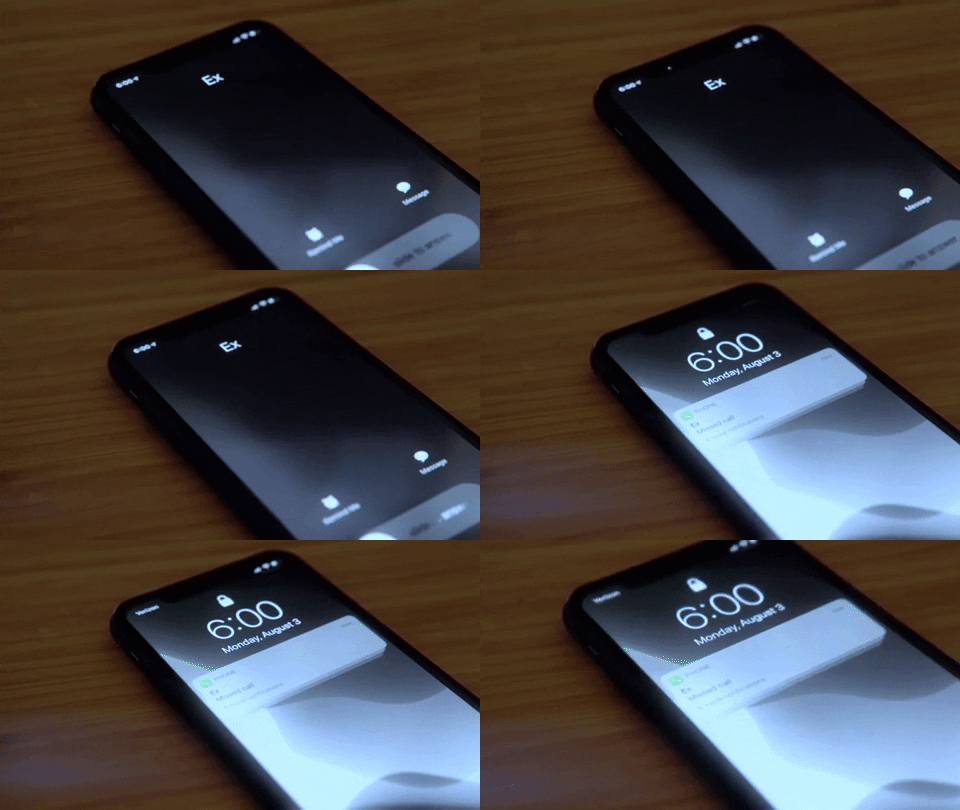
HERE ARE THE FACTS:
1. Your cortisol spike in the morning hits harder than your ex’s breakup text.
It’s your body’s natural trigger to wake you up, 30 to 45 minutes after opening your eyes, cortisol (your stress hormone) peaks.
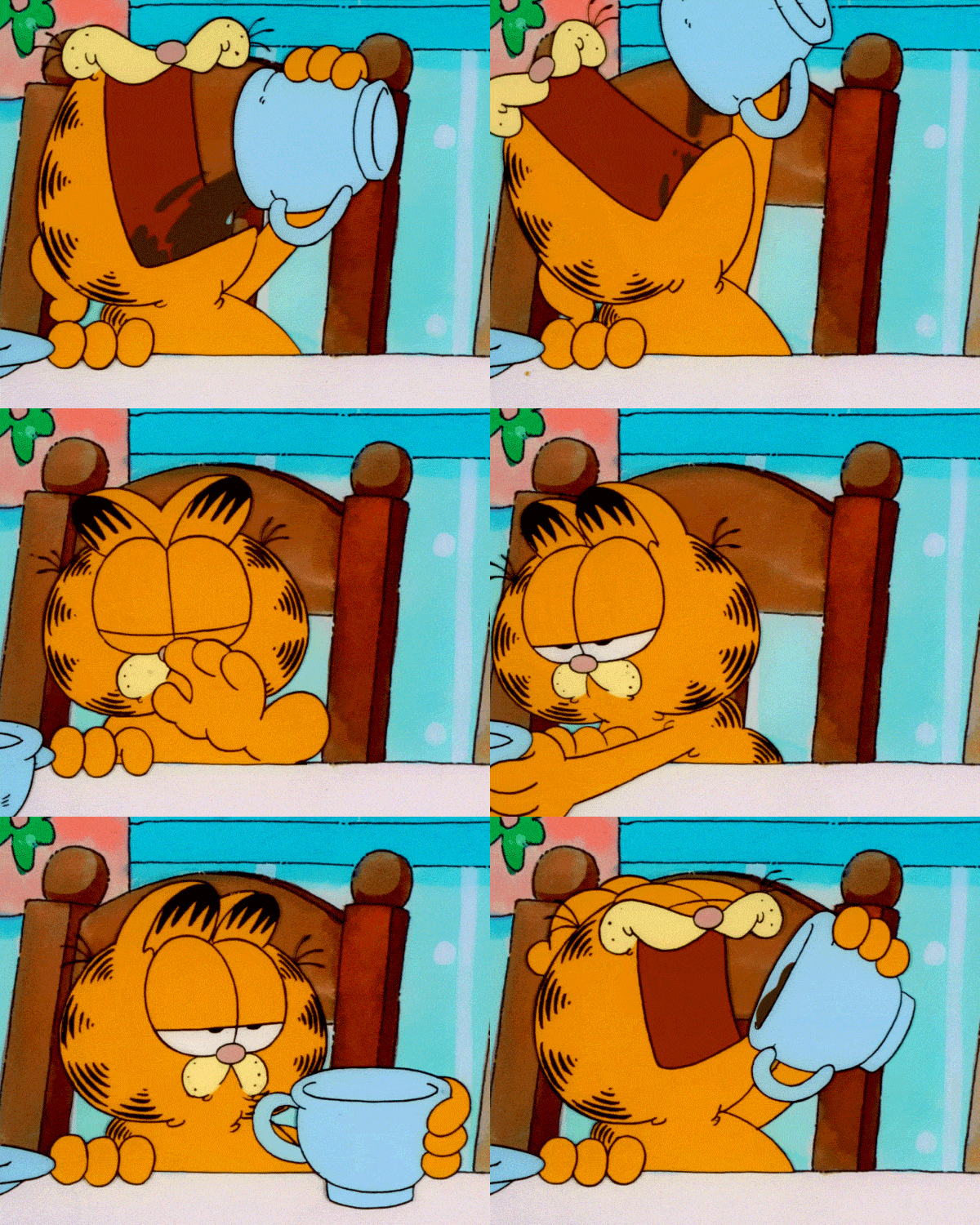
Drink coffee right after waking? You're basically double-texting your anxiety.
☕ BioHack: Wait 60–90 minutes post-wake-up to caffeinate. Let your cortisol chill before you do the most.
2. Long-term Anxiety can Shrink Areas of your Brain (literally)
Chronic stress = too much cortisol = your brain slowly looses memory and focus abilities
💊 BioHack: Think sharper, stress less; Magnesium, B vitamins, and omega-3s are your certified brain besties.
— Stanford Medicine, 2021 & Nature Neuroscience, 2014; Frontiers in Psychology, 2017
Biotech Spotlight
3. 🧠PRODUCT: Apollo Neuro
Meet the wearable helping students and professionals stay calm, even when the pressure’s on.
Developed by a group of neuroscientists, Apollo Neuro is the result of years of research into how gentle vibration impulses can optimize your nervous system to sharpen focus.
When Stress calls, Apollo hits ‘Do Not Disturb.’

Find more information @ https://apolloneuro.com
🎯 How it Works: sending subtle "Apollo Vibes™" that cue your body’s natural relaxation response, targeting the vagus nerve to balance stress, energy, and focus.
🎯What the Studies Show:
Reduce stress by up to 40% in just two weeks.
Boost focus and concentration by up to 25% raising heart rate variability (HRV) by around 11% (key to emotional regulation)
Shorten physical recovery time by ~10%, helping you bounce back faster.
4. 📖 READ: Good Anxiety By: Dr. Wendy Suzuki
An easy-to-read, hard-to-forget type of book. Anxiety, stress, and pressure can serve you wonders if you can properly activate and redirect their triggers.
In her book, Dr. Wendy Suzuki does just that, teaching you the skills to flip the script and transform your biggest enemy into your greatest ally.

Dr. Suzuki’s TED Talk has over 55 million views. Safe to say this book isn’t just good… she ‘ate and left no crumbs’.
If cracking open a book isn’t your thing, we got you.
We pulled the main takeaways. Just the good stuff. And hey, maybe it will get you curious enough to flip through the real thing.
Anxiety's Ancient Roots: Blame your cave-man ancestors; this built-in alarm system kept them from becoming predator lunch. So your deadline panic? Your brain thinks it's a tiger.
Brain Rewire: Good news! your brain's not stuck. Neuroplasticity means it can actually rewire. Those anxiety triggers? You can give them a new meaning.
Stress is Your Secret Superpower: Instead of avoiding stress, tap into it. See it as a tool to grow, even a privilege…
📖5. STUDY: What’s up with Research?
Microbiome and Anxiety: Research is exploring how the function of the microorganisms in our gut (the gut microbiome) can be linked to anxiety levels.
Heritability of Anxiety: Twin and family studies now suggest that a significant portion of the risk for developing anxiety disorders may be attributed to genetic factors.
Potential for Probiotics: Early research hints that interventions targeting the gut microbiome, like probiotic supplements, might help alleviate anxiety symptoms.

Common Misconceptions
👍Get it Right.
Stress ≠ Anxiety. Time to Know the Difference
STRESS = Reacting to what’s happening
Triggered by external factors (deadlines, exams, traffic, etc.)
Usually has a clear cause and ends when the situation resolves
Can be motivating in short bursts
ANXIETY = Fearing what might happen
Triggered by internal processes (worry, anticipation, fear of the future)
Often persists even when the threat or stressor is gone
Feels disproportionate to the actual situation
That’s everything for now! Thanks for hanging out with Inside Health this week. Understanding how you function starts with education, and you’re already doing the work just by being here.
Until next time, keep asking questions, stay curious, and don’t stop Inside Health-ing your way to a smarter, healthier you.
Until Next Time! —The Inside Health Team.